
BASIC RESEARCH
KURYLO, Sergiy – BROSKA, Igor. Formation of non-equilibrium accessory mineral paragenesis in S- / I-type granitic rocks (example from the Western Carpathians). (Vznik paragenézy nerovnovážnych akcesorických minerálov v granitových horninách typu S-/I (príklad zo Západných Karpát). In Chemical Geology, 2025, vol. 677, art. no. 122625. (2024: 3.6 – IF, Q1 – JCR, 1.394 – SJR, Q1 – SJR). ISSN 0009-2541.
https://doi.org/10.1016/j.chemgeo.2025.122625
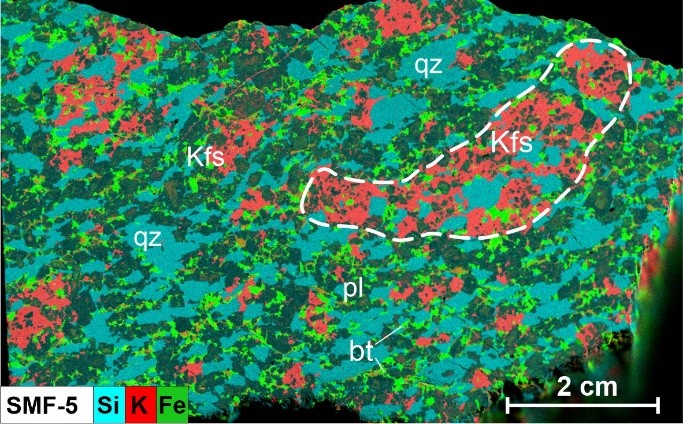
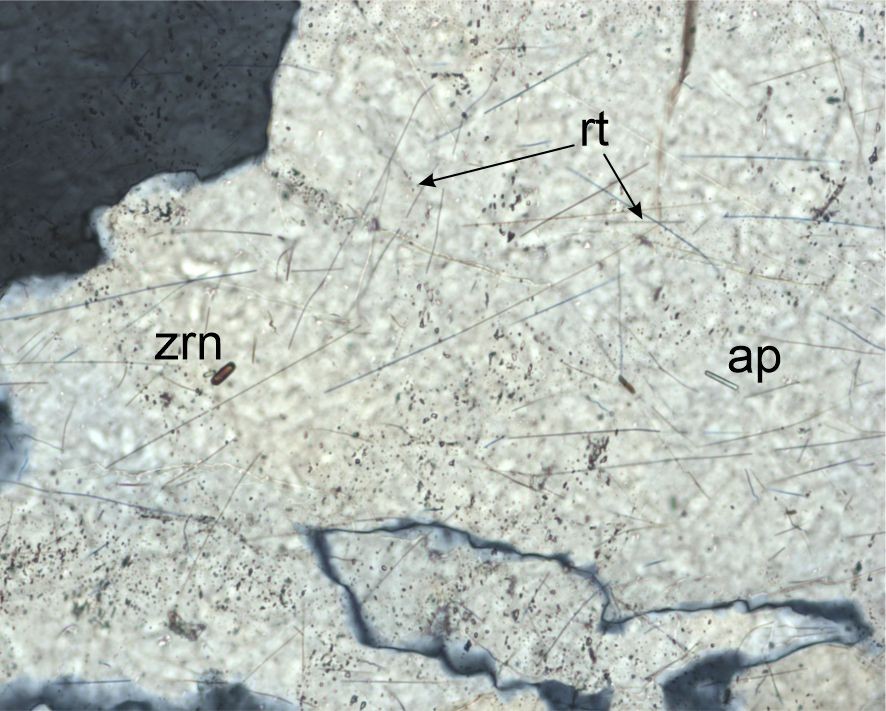
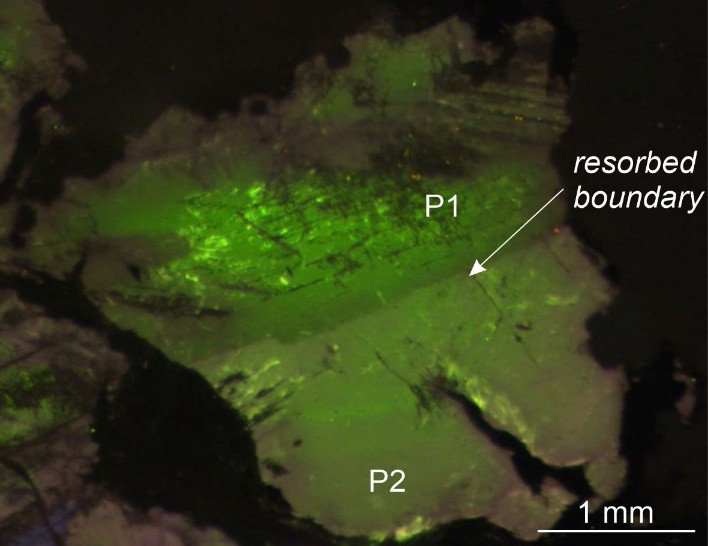
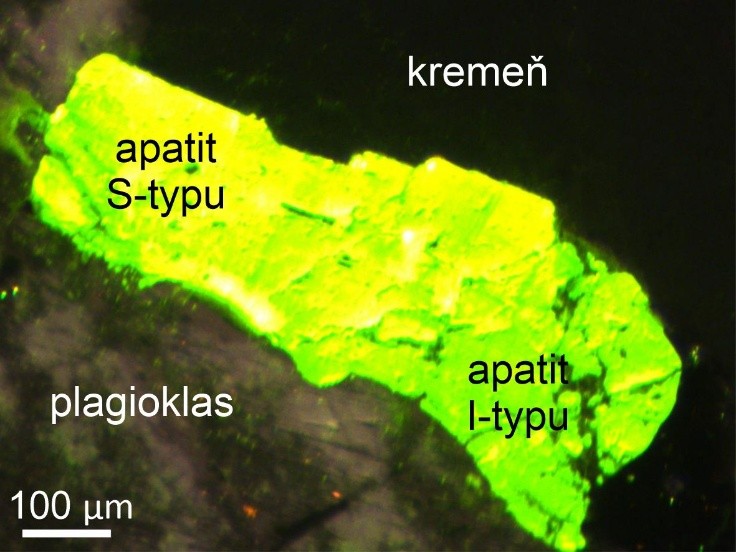
The mixing process in the West Carpathian Variscan magmatic systems, which produced non-equilibrium paragenesis of accessory minerals, is described using the example of granites from Mala Fatra. This means that in an imperfectly homogenized granitic rock, the paragenesis of I-type granites (Ti-magnetite, allanite, titanite, apatite with low Mn content) but also of S-type rocks (with monazite and apatite with high manganese content) simultaneously occurs. Imperfect mixing is manifested by the conversion of apatite with the characteristics of apatites of I-type granites into apatite typical of crustal S-type granites, plagioclase relics with a composition typical of high-temperature gabbroic rocks originating from the Earth’s lithospheric mantle. Such granitic (granite) rocks, where some part can be classified as granodiorite and the other as tonalite, we have designated, in accordance with the classification of Castro et al. (1999), as granotonalite or H-type granite. The identified high-temperature non-equilibrium parageneses in granites are important not only for understanding the genesis of granites but are also an indicator of the transfer of elements from deep mantle sources of the Earth with an impact on the prospective metallogenetic potential.
VALACH, Fridrich – REVALLO, Miloš – KOČI, Eduard. Auroral-oval activity during the intense magnetic storm of May 2024 – Overcoming the underestimation of the AE index. (Auroálno – oválna aktivita počas intenzívnej magnetickej búrky v máji 2024 – prekonanie podhodnotenia indexu AE). In Advances in Space Research, 2025, vol. 76, no. 12, p. 7251-7260. (2024: 2.8 – IF, Q1 – JCR, 0.704 – SJR, Q1 – SJR). (2025 – WOS, SCOPUS, NASA ADS). ISSN 0273-1177. https://doi.org/10.1016/j.asr.2025.03.052
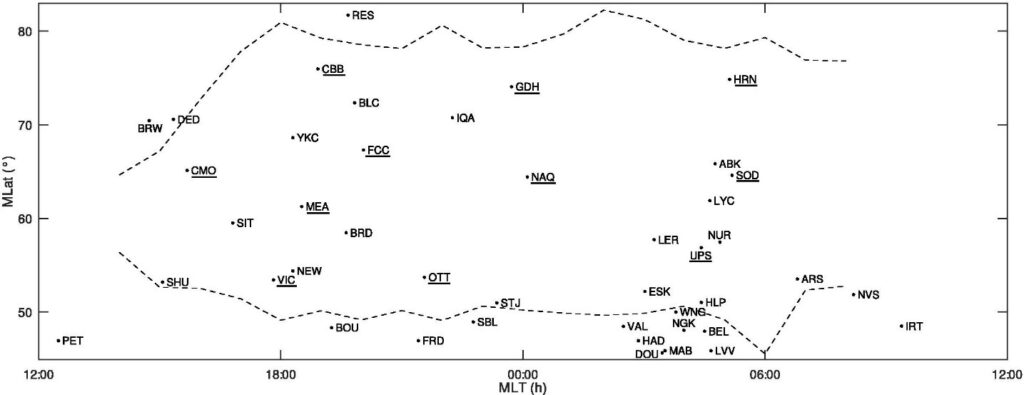
We analyzed the auroral oval activity (quantified by the AU, AL, and AE indices) during the intense magnetic storm on May 10 and 11, 2024, as seen in the records of the INTERMAGNET geomagnetic observatories. During geomagnetic disturbances, the auroral oval expanded into sub-auroral regions with lower geomagnetic latitudes compared to the latitudes of the observatories used to calculate the indices AU, AL, and AE. We calculated the new versions of the auroral oval indices using the standard methodology with one important modification: They considered observatories that were currently located below the auroral oval at the given moments during the magnetic storm. We found that from midnight to early morning on May 11, 2024 (UT time), the standard indices significantly underestimated the auroral oval activity. We also indicated the direction of further research needed to overcome the limitations resulting from the saturation of the Kp index on our modified method.
REVALLO, Miloš – GUBA, Peter. Whirling hexagonal convection in a rotating binary-alloy mushy layer. (Víriaca hexagonálna konvekcia v rotujúcej kašovitej vrstve z binárnej zliatiny). In Physica D : Nonlinear Phenomena, 2025, vol. 483, art. no. 134897, online. (2024: 2.9 – IF, Q1 – JCR, 0.94 – SJR, Q1 – SJR). ISSN 0167-2789.
https://doi.org/10.1016/j.physd.2025.134897
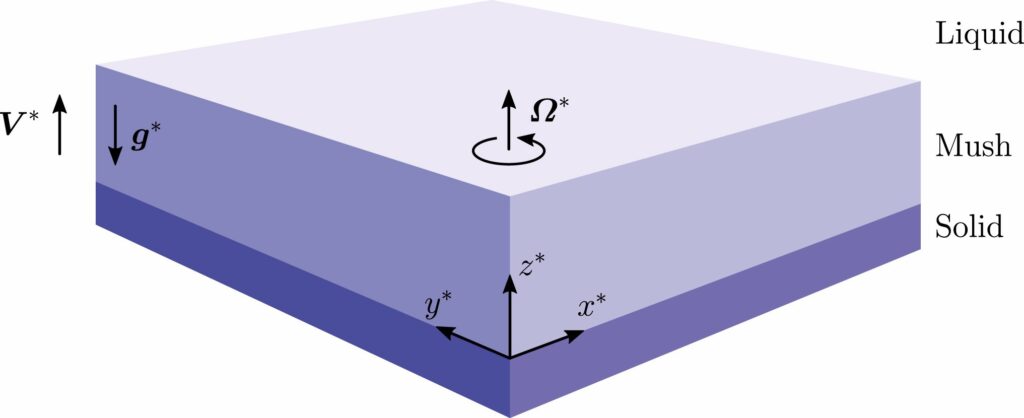
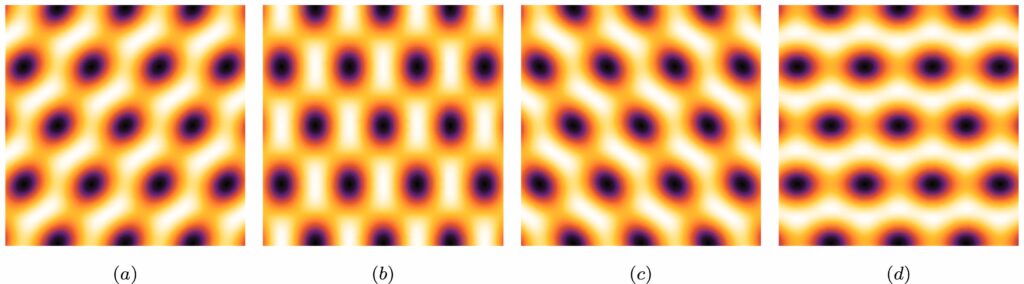
The solidification of multicomponent alloys often produces partially solidified regions known as mushy layers. Their complex dynamics arises from nonlinear interactions between heat, mass and solute transport. Mushy layers arise in both industrial and natural settings and have been the focus of extensive theoretical and experimental study. In geophysics, mushy layers can form at phase-transition interfaces, such as the boundary between the Earth’s inner and outer core. This theoretical work examines small-amplitude convection in a mushy layer rotating about the vertical axis during binary-alloy solidification. Previous studies have shown that the dependence of permeability on the local solid fraction, an intrinsic property of mushy layers, favours the formation of steady three-dimensional hexagonal patterns near the onset of convection. We demonstrate that rotation breaks the chiral symmetry of these patterns, triggering a secondary instability in the form of oscillating hexagons. The weakly nonlinear evolution near this symmetry-breaking transition is described using amplitude equations. Analysis of these equations identifies the relevant bifurcation points and their dependence on system parameters. We conclude by proposing parametric regimes suitable for the observation of oscillating hexagons under laboratory conditions.
ApPLIED RESEARCH
BÓDI, Jozef – VAJDA, Peter – PAŠTEKA, Roman – PÁNISOVÁ, Jaroslava – PAPČO, Juraj – ZAHOREC, Pavol – FERNÁNDEZ, José. Applicability of Growth inversion in microgravimetry for archeological prospection and sinkhole hazard detection: Jur, Koš and Senec case studies. (Použiteľnosť inverzie rastu v mikrogravimetrii pre archeologickú prospekciu a detekciu nebezpečenstva prepadov zemského povrchu: prípadové štúdie z Jura, Košu a Senca). In Journal of Applied Geophysics, 2025, vol. 238, p. 105718. (2024: 2.1 – IF, Q2 – JCR, 0.576 – SJR, Q2 – SJR). ISSN 0926-9851.
https://doi.org/10.1016/j.jappgeo.2025.105718
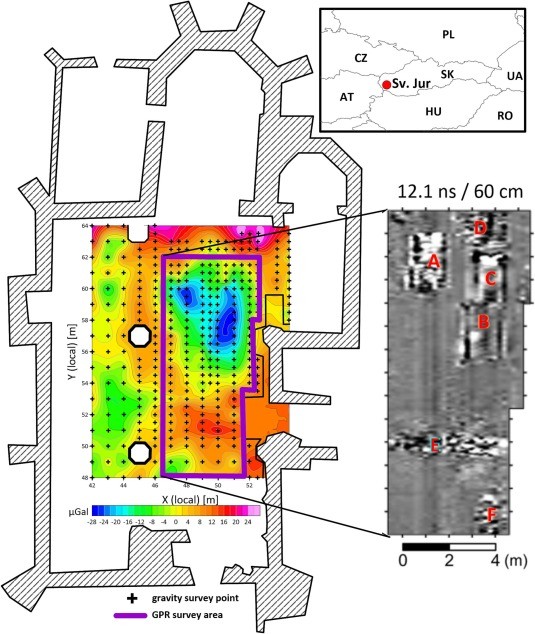
The applicability and benefits of gravimetric interpretation based on the Growth inversion methodology in near-surface geophysics is demonstrated by case studies from the realm of archaeological prospection and sinkhole hazard detection. These case studies cover detection of shallow cavities, such as unknown crypts in churches, shafts and galleries of shallow underground mining, unknown cellars in urban areas, or shallow cave space in karst areas.
PÁNISOVÁ, Jaroslava – BIELIK, Miroslav – HURAIOVÁ, Monika – GODOVÁ, Dominika – BEZÁK, Vladimír – KONEČNÝ, Patrik – HURAI, Vratislav. Insight into the continental lithosphere using 3D geophysical and petrological modelling: An example from the Novohrad-Gemer region (Pannonian Basin, Slovakia-Hungary). (Pohľad do kontinentálnej litosféry pomocou 3D geofyzikálneho a petrologického modelovania: príklad z oblasti Novohrad – Gemer (Panónska panva, Slovensko – Maďarsko). In Global and Planetary Change, 2025, vol. 247, art. no. 104735. (2024: 4 – IF, Q1 – JCR, 1.431 – SJR, Q1 – SJR). ISSN 0921-8181.
https://doi.org/10.1016/j.gloplacha.2025.104735
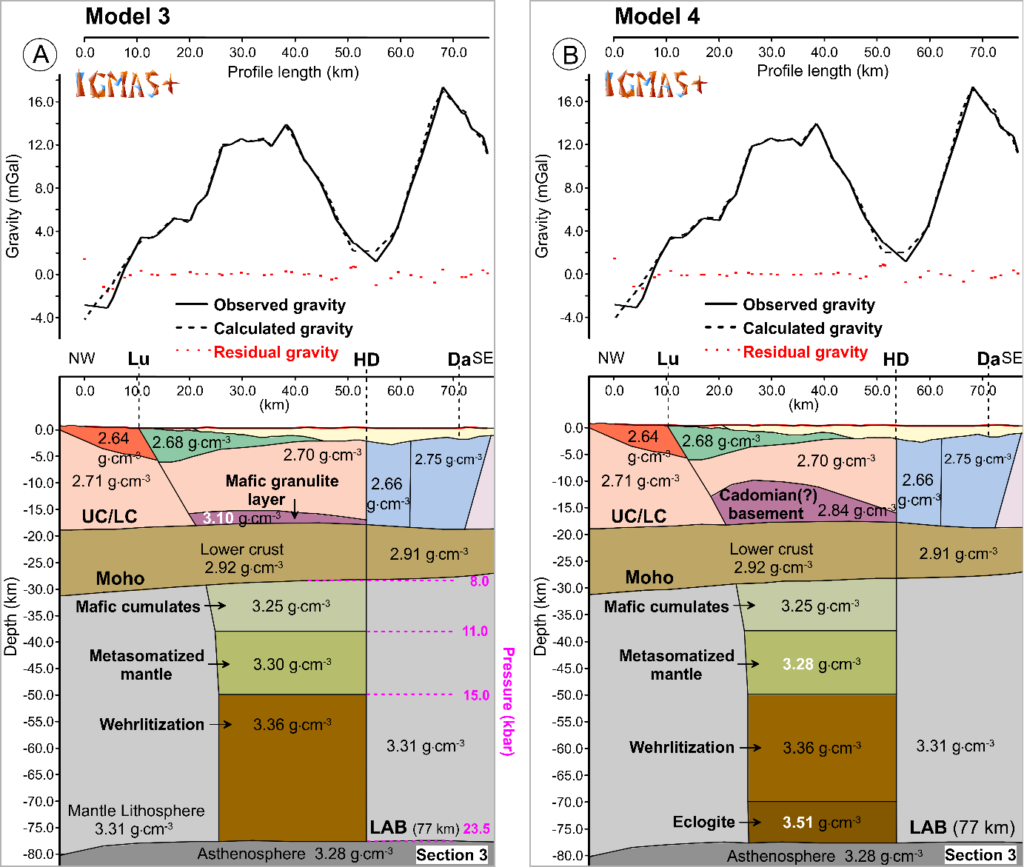
Integrated 3D geophysical and petrological modelling revealed a layered lithosphere in the northern Pannonian Basin, demonstrating the applicability of this approach to lithospheric-scale reconstruction. A local gravity high overlaps with a high-conductivity zone, indicating a transition zone between an anomalous mantle domain and a non-metasomatized, normal depleted mantle. Garnet-bearing mafic rocks identified at the Conrad discontinuity, together with a deep and thick wehrlite layer, are interpreted as the main sources of the studied gravity anomaly. Mafic cumulates derived from alkali basalts intercalate the mantle below the Moho. The metasomatized and wehrlitized mantle is inferred to extend from 29 km
depth down to the LAB (77 km) depths. Several geologically plausible models were tested. Alternative scenarios include the presence of a Cadomian (?) crustal segment beneath the Veporic unit, or a purely hypothetical eclogite layer situated at greater mantle depths.
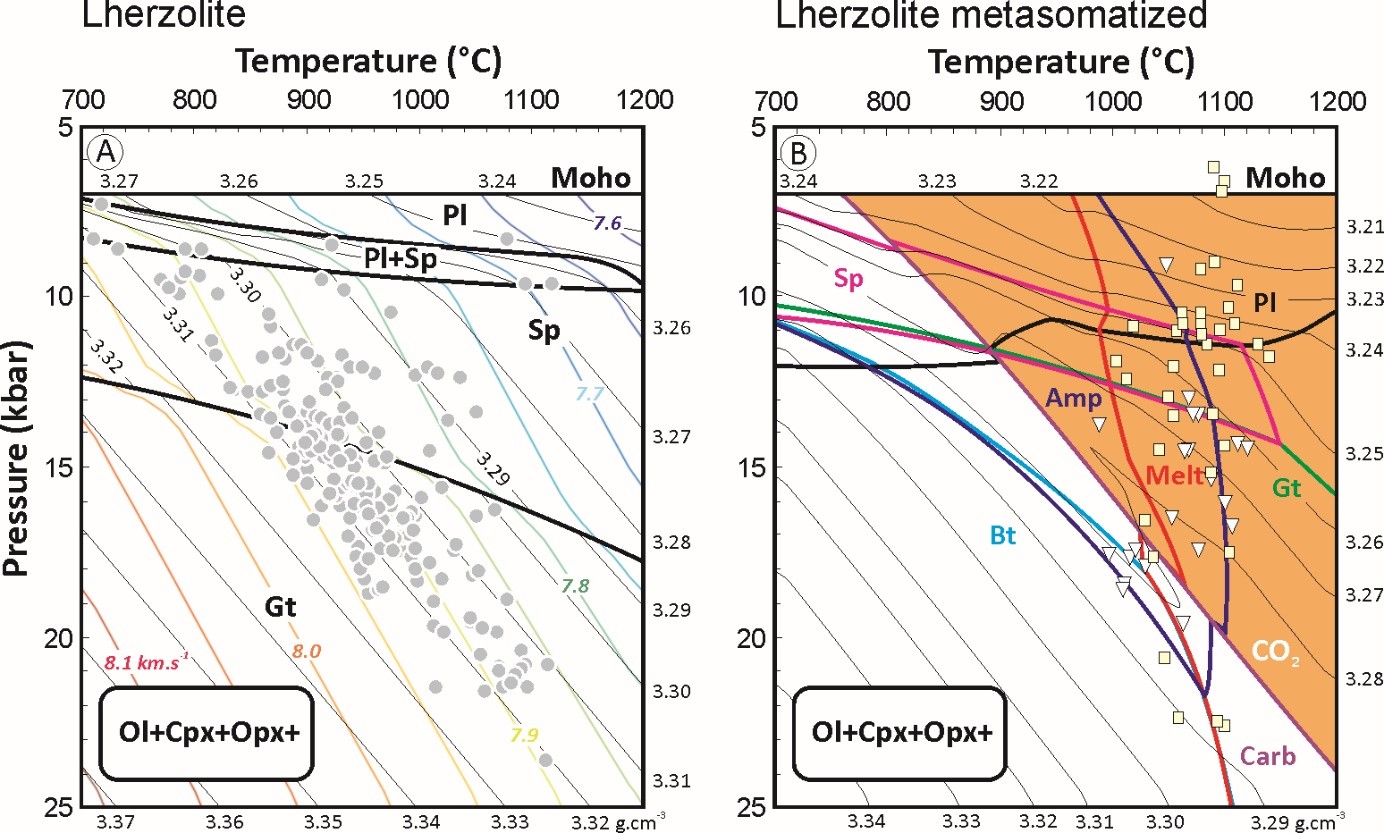
B) Same for metasomatized lherzolite with thermobarometric data derived from diopside (triangles) and amphibole megacrystals (yellow squares) that were brought to the surface by basaltic lava.
VLASÁČ, Jozef – MIKUŠ, Tomáš – MAJZLAN, Juraj – ŠTEVKO, Martin – TUČEK, Peter. Bonanza-type epithermal Ag-Au mineralisation in Nová Baňa (Western Carpathians, Slovakia). (Epitermálna Ag – Au mineralizácia typu Bonanza v Novej Bani (Západné Karpaty, Slovensko). In Ore Geology Reviews, 2025, vol. 178, art. no. 106493. (2024: 3.6 – IF, Q1 – JCR, 1.261 – SJR, Q1 – SJR). ISSN 0169-1368.
https://doi.org/10.1016/j.oregeorev.2025.106493
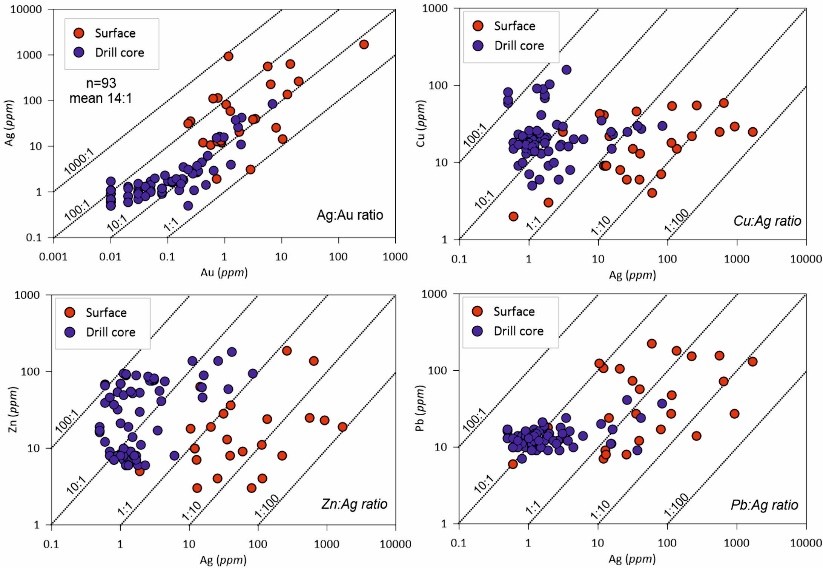
Bonanza-type epithermal Au-Ag mineralisation at Šibeničný vrch in Nová Baňa is unique in the view of mineral composition and geochemical signature. The mineral assemblage includes rozhdestvenskayaite-(Zn), zvěstovite-(Zn), zvěstovite-(Fe), argentopolybasite, argentopearceite, auropolybasite, auropearceite, Au-Ag alloys, selenostephanite, stephanite, naumannite, proustite, acanthite, uytenbogaardtite, iodargyrite, and bromargyrite. Base-metal sulfides (galena, sphalerite, chalcopyrite), polybasite, and pearceite are located only in the deeper parts of the vein. A combination of vigorous boiling and fluid mixing with meteoric water is probably responsible for mineralisation. The deposition of base-metal sulfides in the depth depleted the fluid in Pb, Zn, and Cu, and left an Ag-Au-rich fluid for the formation of the bonanza mineralization in the top part of the vein.
RESEARCH RELATED TO INTERNATIONAL COLLABORATION
HURAI, Vratislav – HURAIOVÁ, Monika – SLOBODNÍK, Marek – SLAVÍČEK, Karel. Carbonatite Isotope Dataset (CID): A critical reappraisal of Sr, Nd, C, O isotopes and trends. (Dataset izotopov karbonatitu (CID): kritické prehodnotenie izotopov a trendov Sr, Ng, C, O). In Earth-Science Reviews, 2025, vol. 271, art.no. 105273. (2024: 10 – IF, Q1 – JCR, 3.463 – SJR, Q1 – SJR). ISSN 0012-8252.
https://doi.org/10.1016/j.earscirev.2025.105273
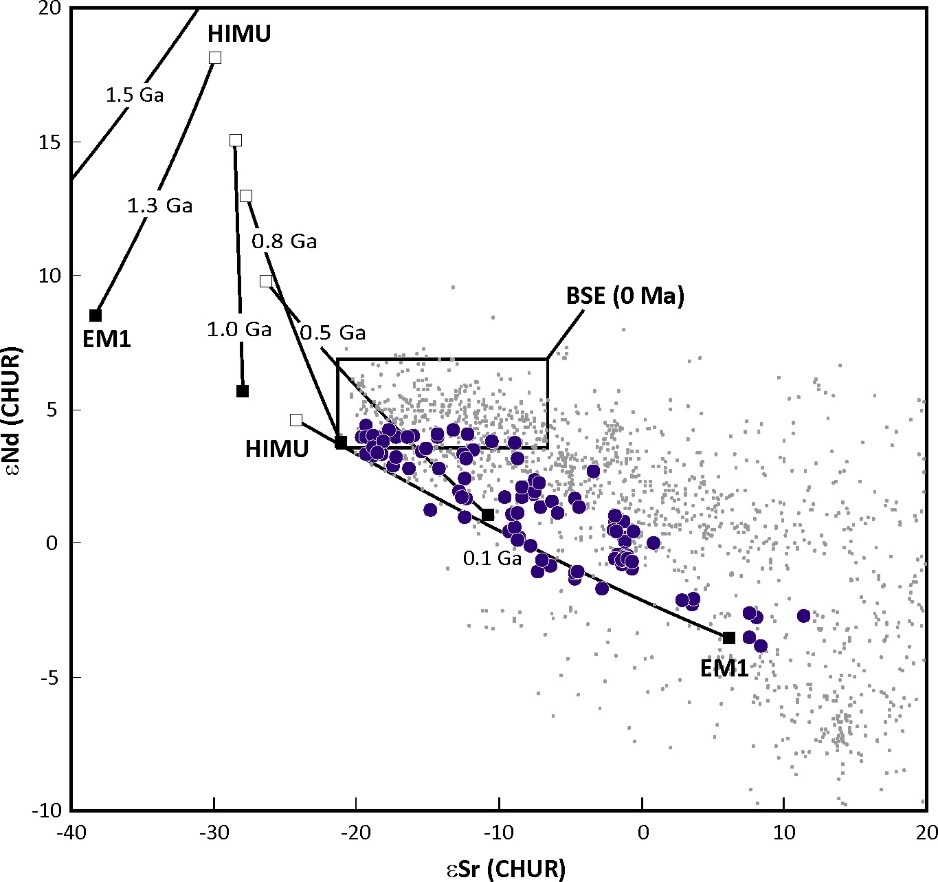
The authors analyzed isotopic data from 319 carbonatite and phoscorite deposits worldwide. Based on 2528 C-O and 2381 Sr-Nd isotopic analyses, they constructed thermal maps and recorded isotopic changes in the interval from 3 billion years ago to the present. They refined the definition of primarily magmatic carbonatites and found through modeling that most trends in the C-O isotopic record result from interaction with fluids with different CO2 content, temperature, and fluid-to-rock ratio. The authors of the study revealed a gradual evolution of the source of carbonatite magma, initially generated from depleted mantle (DM) in the Archean and later from the mantle plume (HIMU). The switch between DM- and HIMU-like characteristics of carbonatite magmas occurred between 1.4 and 1.8 billion years ago. Inverse modeling of isotopic trends has shown that, for example, the HIMU-EM1 (mantle reservoir enriched by subducted oceanic crust with pelagic sediments) isotopic trend typical of modern carbonatites (e.g., the East African Rift System) cannot be used as a template for Pre-Cretaceous carbonatites, because the EM1 component does not appear at all in the isotopic record of carbonatites older than 800 Ma. It is very likely that the role of the enriched EM1 mantle reservoir in the genesis of Precambrian carbonatites has been overestimated at the expense of the crustal assimilant. The same assumption applies to the role of the EM2 mantle reservoir enriched by interaction with the oceanic crust intercalated with terrigenous sediments.
JAMBROVIĆ, Martina – HAMERLÍK, Ladislav – SZARŁOWICZ, Katarzyna – HRDÝ, Tomáš – MILOVSKÝ, Rastislav – ČERBA, Dubravka – JĘDRZEJEK, Filip – KYŠKA-PIPÍK, Radovan – CHAMUTIOVÁ, Tímea – BITUŠÍK, Peter. Subfossil chironomid assemblage shifts indicate Little Ice Age termination, deforestation, and human impact in a subalpine lake catchment. In Aquatic Sciences, 2025, vol. 87, no. 4, art. no. 81. (2024: 1.8 – IF, Q2 – JCR, 0.642 – SJR, Q2 – SJR). ISSN 1015-1621.
https://doi.org/10.1007/s00027-025-01208-9
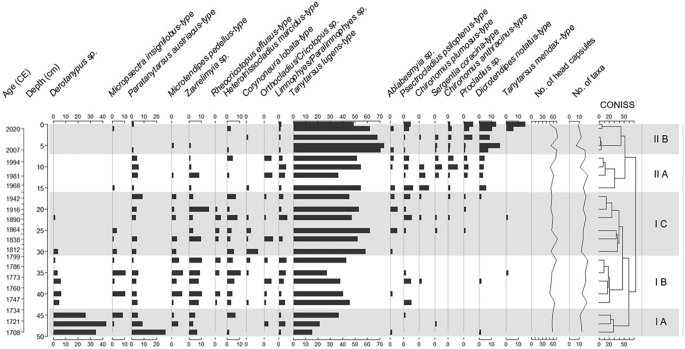
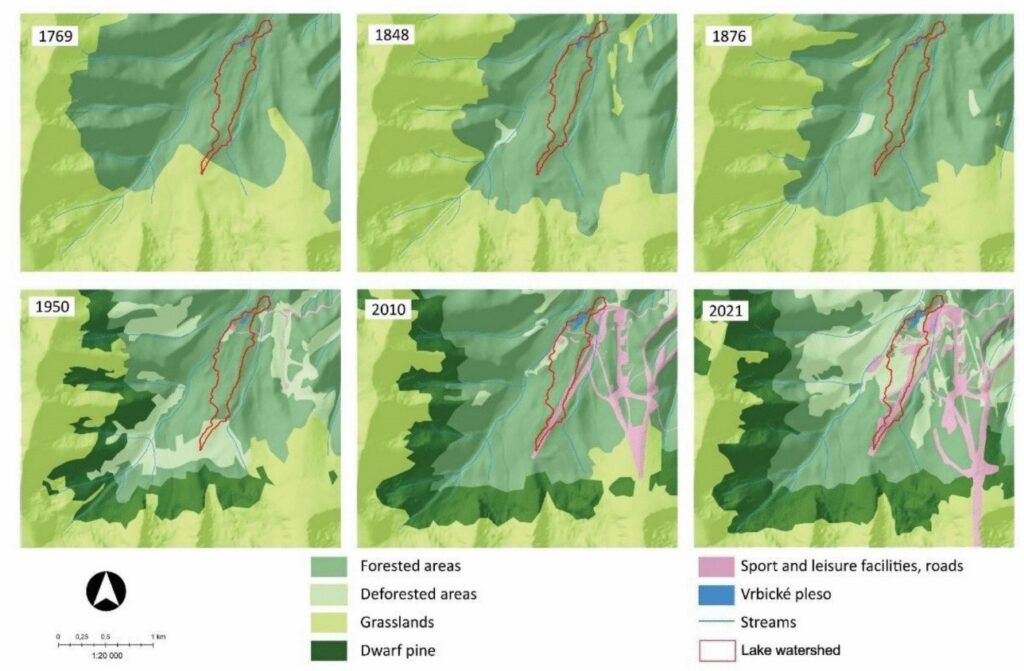
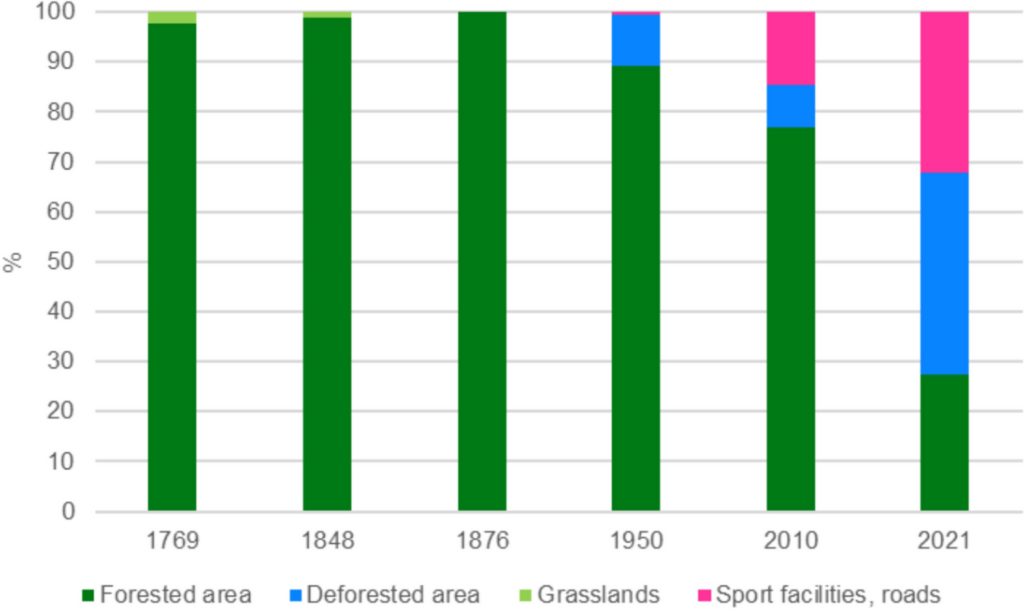
Paleoecological reconstruction conducted on a short sediment core from a subalpine lake (Vrbické pleso, Nízke Tatry Mts.) covered the past ~300 years of its history, and aimed to assess the impact of climatic oscillations and documented human impact in the catchment. An analysis of subfossil chironomid remains, supported by a land cover reconstruction using historical maps and orthoimagery, showed two main phases of lake development. The first preceded major anthropogenic pressure, and was marked by the cold conditions of the Little Ice Age. The second phase, started with the opening of the first hotel in the lake vicinity in 1950, was characterised by massive infrastructure and tourism expansion, as well as recent climate warming, all of which likely make lake recovery improbable.
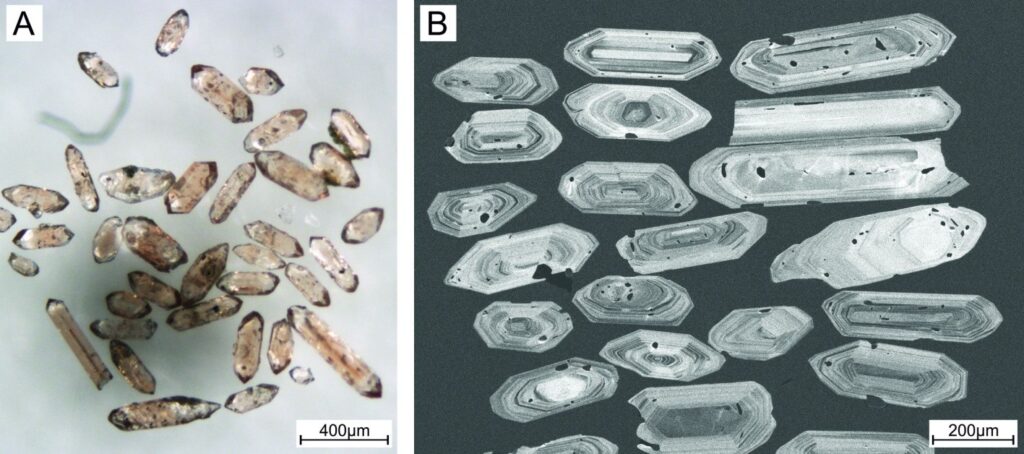
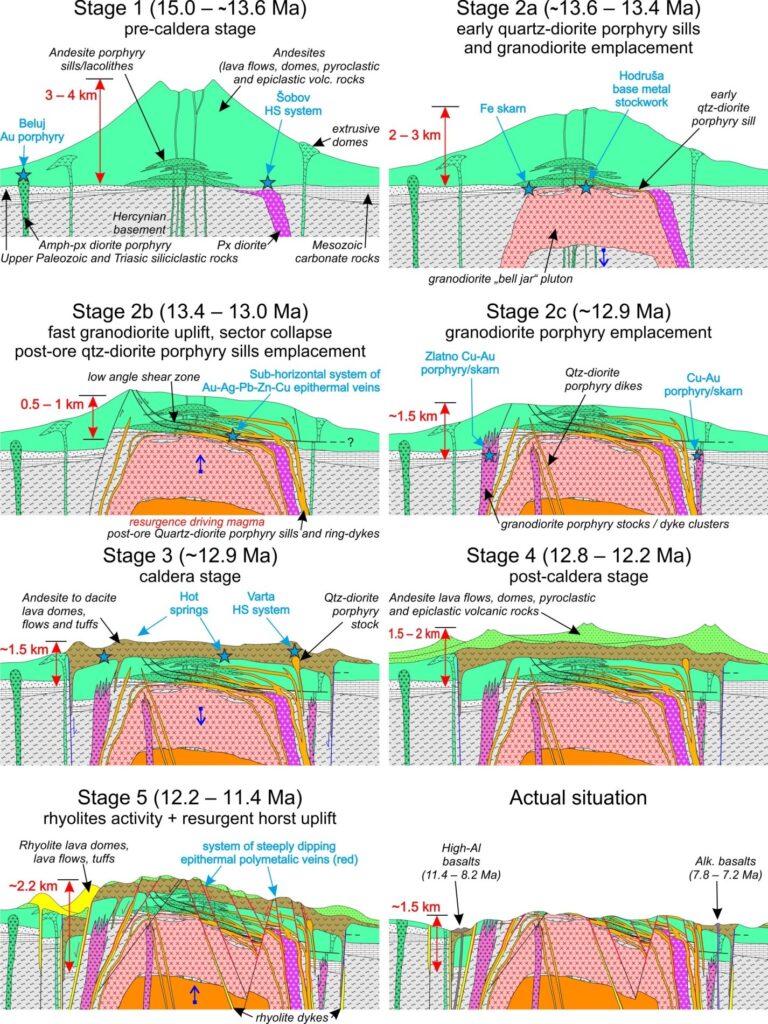
LEXA, Jaroslav – YI, Keewook – BROSKA, Igor – CIESIELSKA, Zuzana – KODĚRA, Peter – KOHÚT, Milan – MATHUR, Ryan – PRCÚCH, Ján – SZCZERBA, M. – UHLÍK, Peter – VOJTKO, Rastislav. Evolution of the Štiavnica Stratovolcano revisited: SHRIMP U-Th-Pb zircon dating of subvolcanic intrusions, caldera fill and B. Hodruša precious/base metal deposit (including Re/Os and K/Ar data). (Revidované preskúmanie vývoja štiavnického stratovulkánu: SHRIMP U-Th-Pb zirkónové datovanie subvulkanických intrúzií, výplň kaldery a vzácne / základné ložiská kovov (vrátane údajov z Re/Os a K/Ar) z Banskej Hodruše). In Geologica Carpathica, 2025, vol. 76, no. 2, p. 93-116. (2024: 1.5 – IF, Q2 – JCR, 0.526 – SJR, Q2 – SJR). (2025 – Current Contents). ISSN 1335-0552.
https://doi.org/10.31577/GEOLCARP.2025.05
The complex Štiavnica Stratovolcano is the most extensive one among the Miocene to Quaternary volcanoes of the Carpathian-Pannonian region that hosts the world-class Banská Štiavnica ore district of precious and base metals. Structural relationships, biostratigraphic data and previous dating by K/Ar and Rb/Sr methods established general timing of its evolution. However, they could not resolve the critical interval of the subvolcanic intrusive complexes emplacement and the caldera subsidence due to a low precision and alterations. New results of SHRIMP U-Th-Pb dating on zircons applied to subvolcanic intrusions and caldera filling complete the story. They enable an essential reinterpretation of the Štiavnica stratovolcano evolution including its subvolcanic intrusions and related mineralizations. The work opens a way to a fundamental discussion of mutual relationships among magmatic, structural and metallogenetic processes in large and complex andesitic volcanoes.